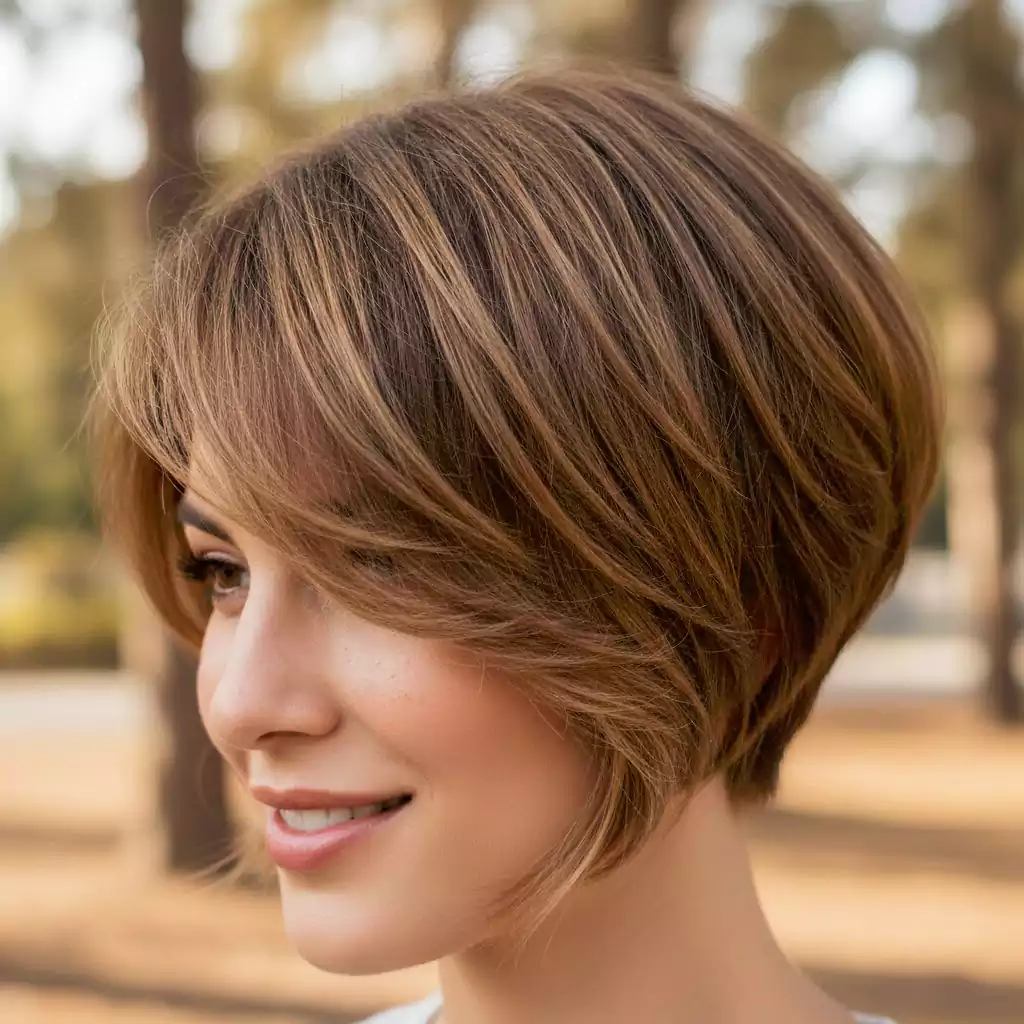
The pixie bob haircut, often called the bixie, blends the bold short length of a pixie with the soft structure of a bob.
It is especially popular for thick hair, as strategic internal layering removes bulk while preserving natural volume and texture.
For a full overview of bob variations, see our
Classic Bob Haircut Guide.
Why the Pixie Bob Works So Well for Thick Hair
The bixie has surged in popularity in 2026 because it solves common thick-hair problems:
- Removes excess bulk without harsh thinning
- Enhances movement and airflow
- Keeps styling quick and low-maintenance
- Grows out smoothly into a short or classic bob
- Works on straight, wavy, or curly thick hair
Trending Pixie Bob (Bixie) Styles for Thick Hair in 2026
Layered Bixie for Very Thick Hair
Choppy, feathered layers lighten dense hair while keeping lift at the crown.

Wavy Pixie Bob for Thick Hair
Soft, diffused layers embrace natural waves and prevent puffiness.

Pixie Bob with Bangs for Thick Hair
Curtain or wispy bangs frame the face without adding heaviness.
Explore Bob Haircuts with Bangs

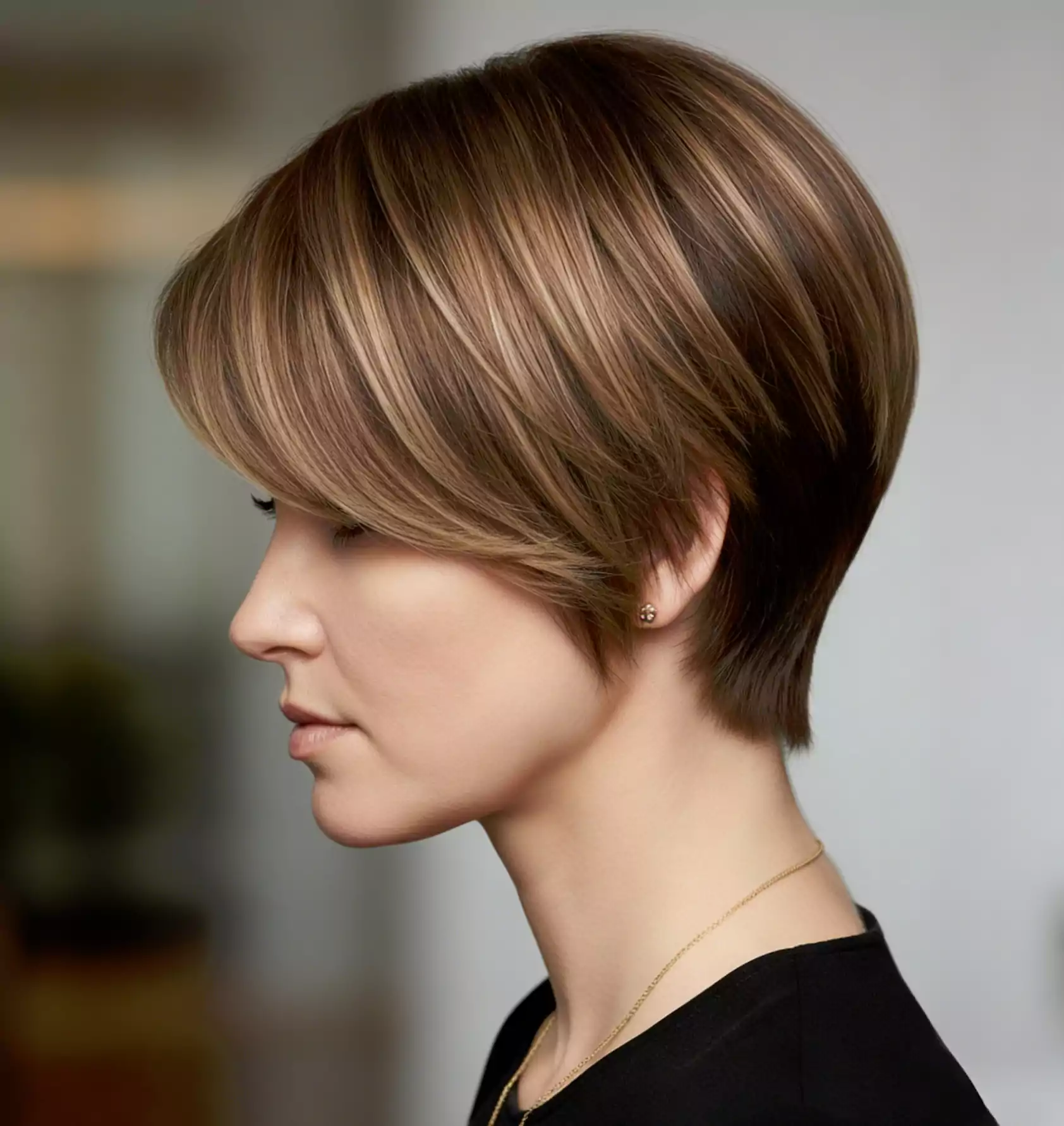
Sleek Straight Pixie Bob
Polished and modern, this style uses subtle internal thinning for clean lines.
Pixie Bob for Different Face Shapes
Round
- Recommended Tip: Height at crown + tapered sides
- Guide
Oval
- Recommended Tip: Most bixie variations work
- General Bob Styles
Square
- Recommended Tip: Soft textured ends + bangs
- With Bangs
Heart
- Recommended Tip: Longer front pieces near jawline
Celebrity Pixie Bob (Bixie) Inspiration
Celebrities who helped popularize bixie haircuts for thick hair include:
- Halle Berry – textured, asymmetrical bixies
- Florence Pugh – edgy, choppy layers
- Kristen Stewart – effortless, tousled looks
- Anne Hathaway – elegant grow-out bixies
Quick Daily Styling (Under 10 Minutes)
- Apply lightweight texturizing paste to damp hair
- Rough-dry with fingers for natural volume
- Define layers using a matte pomade
- Optional: finish with sea salt spray
Avoid: heavy oils or serums that flatten thick hair.
Maintenance: trim every 4–6 weeks.
Common Pixie Bob Mistakes for Thick Hair
- Blunt cutting that creates a blocky shape
- Skipping internal layering
- Over-thinning only the ends
- Waiting too long between trims
Read the Complete Bob Haircut Mistakes Guide
Try Pixie Bob Styles Virtually
Preview every pixie bob variation on your own face with AI.
👉 Try On Pixie Bob Styles Free →
Related Bob Haircut Guides
- Long Bob Haircut (Lob) — Shoulder-grazing bob styles that offer maximum versatility and low commitment
- Short Bob — Edgy and modern
- A-Line Bob — Angled sophistication
- Fluffy Bob — Effortless volume & 90s vibes
- Long Bob Haircut (Lob) — Shoulder-grazing bob styles that offer maximum versatility and low commitment
- Toddler Bob Haircut — Soft, safe bob styles designed for young children
- Bob Haircut with Bangs — Face-framing bob styles with blunt, curtain, or wispy bangs
- Curly Bob Haircut — Bob haircuts designed to enhance natural curls and texture
- Bob Haircut for Round Face — Flattering bob styles that elongate and balance round face shapes
- Bob Haircut Over 50 — Age-defying bob hairstyles with volume and softness
FAQ
What is a pixie bob (bixie) haircut?
A pixie bob, or bixie, blends the short length of a pixie cut with the soft structure of a bob, using strategic internal layering to remove bulk while preserving volume and texture.
Is the pixie bob good for thick hair?
Yes — it's especially popular for thick hair as it removes excess bulk without harsh thinning, enhances movement, and keeps styling quick and low-maintenance.
How often should I trim a pixie bob?
Every 4–6 weeks to maintain the shape and prevent it from becoming blocky or losing its layered texture.
Which face shapes suit a pixie bob best?
Oval faces work with most variations; round faces benefit from height at the crown and tapered sides; square faces need soft textured ends and bangs; heart shapes look great with longer front pieces near the jawline.
Is the pixie bob high-maintenance?
No — daily styling takes under 10 minutes with lightweight products, rough-drying, and minimal tools, making it one of the lower-maintenance short cuts.